
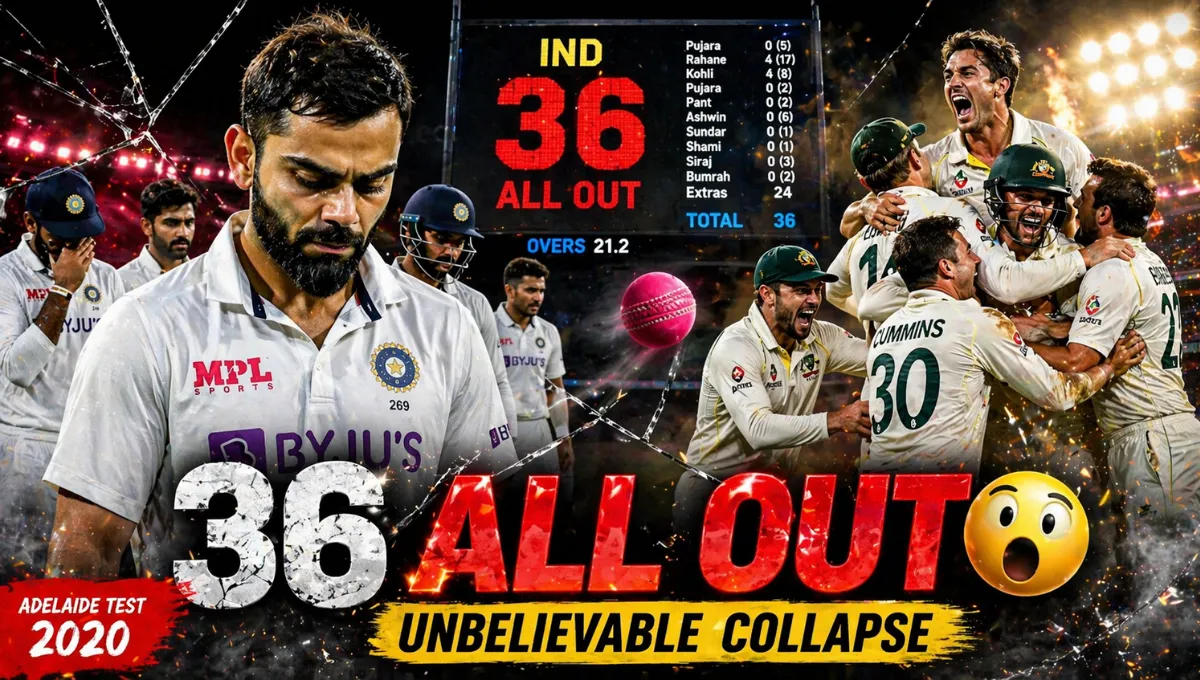
Perth Stadium, November 2024. India bowl out Australia twice and win by 295 runs. It’s India’s biggest-ever Test win on Australian soil. Commentators call it a changed era. Six weeks later, India lose the series 3-1. That swing from statement win to series collapse is the entire India-Australia rivalry compressed into one tour.
But here’s the real problem with how most sites cover this rivalry: they either dump 78 years of stats with zero context, or they cover one tour in isolation and miss the pattern connecting all of them.
Rivalry at a Glance
| Format | Total Matches | India Wins | Australia Wins | Draw/No Result |
|---|---|---|---|---|
| Test | 112 | 33 | 48 | 31 |
| ODI | 155 | 59 | 86 | 10 |
| T20I | 37 | 22 | 12 | 3 |
| Total | 304 | 114 | 146 | 44 |
Australia leads the overall head-to-head 146-114 across 304 meetings since 1947.
But that number hides a format-specific truth most previews skip: India has won more T20Is than Australia, while Australia’s Test dominance is what drags the overall count in their favor.
Where This Rivalry Really Started
The first Test between the two nations was played from November 28 to December 4, 1947, and Australia won by an innings and 226 runs.
That gap tells you how lopsided this rivalry was at birth. It took India another three decades to start closing the distance, and the contest only became genuinely competitive from the 1990s onward, once players like Sachin Tendulkar and later Virat Kohli started delivering results on Australian soil, not just at home.
What People Think vs What the Numbers Actually Show
What most fans assume: Australia has always been the stronger team in this rivalry, full stop. That’s only half true.
What the numbers actually show is a split identity. In ICC knockout tournaments World Cups, T20 World Cups, Champions Trophies the two teams have met 26 times, and Australia leads narrowly, 13-12.
But break it down by tournament type and the picture flips: India has won 4 of 6 T20 World Cup meetings and 3 of 4 completed Champions Trophy meetings. Australia’s advantage comes almost entirely from ODI World Cups, where they’ve won 9 of 14 meetings, including both finals the teams have played against each other, in 2003 and 2023.
This is where most previews get it wrong. They say “Australia dominates ICC events.” The more accurate statement is “Australia dominates ODI World Cups specifically, and India actually leads in T20 World Cups.” That distinction matters if you’re trying to predict outcomes format by format.
Read Also:- Punjab Kings Vs Mumbai Indians Timeline: The Full 2026 Rivalry Story
ICC Tournament Battles: The Knockout History
| Tournament | Matches | India Wins | Australia Wins | Draw/NR |
|---|---|---|---|---|
| Cricket World Cup | 14 | 5 | 9 | 0 |
| T20 World Cup | 6 | 4 | 2 | 0 |
| Champions Trophy | 5 | 3 | 1 | 1 |
| World Test Championship Final | 1 | 0 | 1 | 0 |
| Total | 26 | 12 | 13 | 1 |
The two most painful losses for India in this list are the finals: the 2003 World Cup final, lost by 125 runs, and the 2023 World Cup final on home soil in Ahmedabad, lost by 6 wickets. Both times, India reached the final unbeaten in the tournament and lost only the match that mattered most. That’s not bad luck twice it’s a pattern worth naming directly. India has struggled to close out ODI World Cup finals against Australia specifically.
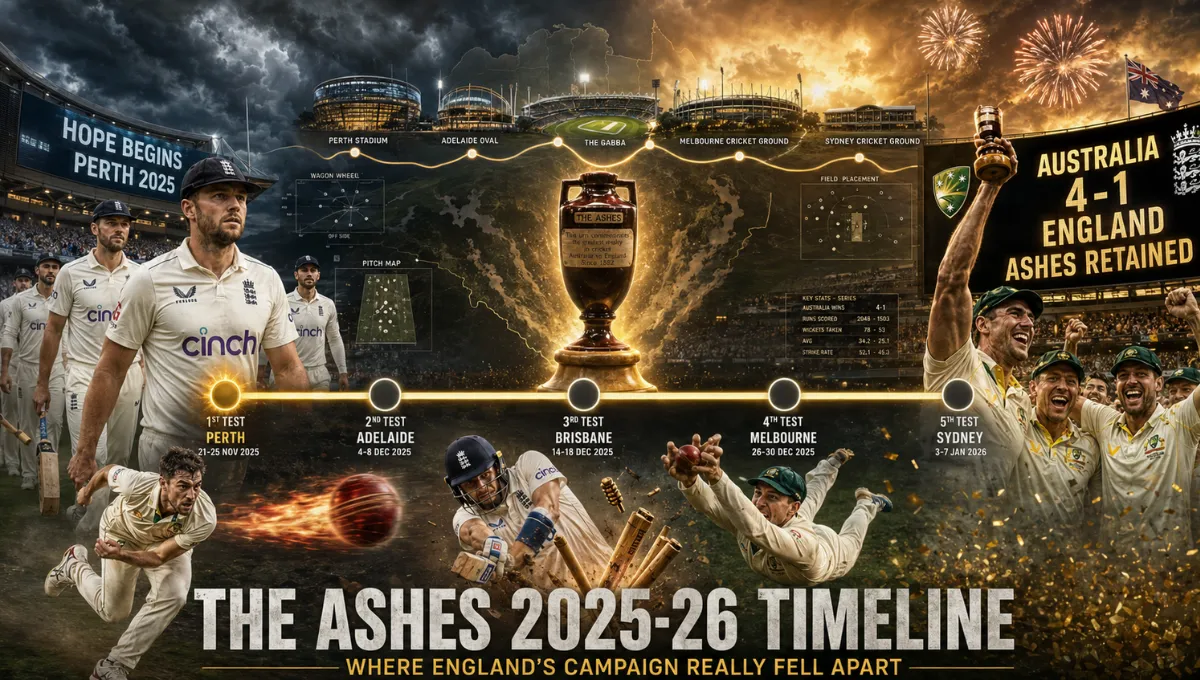
2024-25 Border-Gavaskar Trophy: Timeline & Analysis
Test-by-test breakdown
| Test | Venue | Result |
|---|---|---|
| 1st Test | Perth Stadium | India won by 295 runs |
| 2nd Test | Adelaide Oval (day-night) | Australia won by 10 wickets |
| 3rd Test | The Gabba, Brisbane | Match drawn |
| 4th Test | Melbourne Cricket Ground | Australia won by 184 runs |
| 5th Test | Sydney Cricket Ground | Australia won by 6 wickets |
Australia won the series 3-1.
Turning point of the series
Everyone remembers the Perth win. Almost nobody talks enough about Adelaide, and that’s the actual turning point. India went from a 295-run win to a 10-wicket defeat in the very next Test the pink-ball day-night Test where India’s batting fell apart against the moving ball under lights.
That single Test flipped the psychological momentum of the entire series. From Adelaide onward, Australia won 3 of the remaining 4 Tests, losing none.
Player performance breakdown
Jasprit Bumrah was named Player of the Series with 32 wickets an extraordinary tally for a bowler on the losing side. Travis Head scored 448 runs for Australia and was arguably the batter who did the most damage across the series.
What people miss here: India had the standout individual performer in Bumrah and still lost the series 3-1. That’s a clear signal the problem wasn’t one player underperforming it was collective batting fragility outside of Perth.
2025-26 Australia Tour: ODI & T20I Timeline
ODI series breakdown
| ODI | Date | Result | Details |
|---|---|---|---|
| 1st ODI | 19 October 2025 | Australia won (D/L, 26 overs) | KL Rahul 38, Hazlewood 2-20; Shubman Gill’s first ODI captaincy match [web:9] |
| 2nd ODI | 23 October 2025 | Australia won by 2 wickets | Rohit Sharma 73, Matthew Short 74 |
| 3rd ODI | 25 October 2025 | India won by 9 wickets | Rohit Sharma 121* — his 50th international century |
Australia won the series 2-1. Rohit Sharma was Player of the Series with 202 runs despite the series loss.
T20I series breakdown
| T20I | Date | Result | Details |
|---|---|---|---|
| 1st T20I | 29 October 2025 | No result (rain) | Suryakumar Yadav 39* off 24 |
| 2nd T20I | 31 October 2025 | Australia won | Abhishek Sharma 68 off 37, Hazlewood 3-13 |
| 3rd T20I | 2 November 2025 | India won | Washington Sundar 49* off 23, also took 3-3 with the ball |
| 4th T20I | 6 November 2025 | India won | Washington Sundar 3-3 in 1.2 overs, bowled Australia out for 119 |
| 5th T20I | 8 November 2025 | No result (rain) | Series already decided |
India won the series 2-1.
Abhishek Sharma was Player of the Series, becoming the first Indian to cross 1,000 T20I runs during this tour.
Player performance leaderboard across the 2025-26 tour
| Player | Format | Standout Stat |
|---|---|---|
| Rohit Sharma | ODI | 202 runs, including a 121* that was his 50th international century |
| Abhishek Sharma | T20I | 163 runs at a strike rate that dictated every powerplay India played |
| Washington Sundar | T20I | 3-3 in 1.2 overs in the 4th T20I — one of the tour’s most economical spells |
| Josh Hazlewood | Both formats | Consistently among wickets, with figures of 2-20 and 3-13 in his best spells |
| Nathan Ellis | T20I | 9 wickets, Australia’s most successful bowler across the series |
Read Also:- Royal Challengers Bengaluru Vs Gujarat Titans Timeline
What most previews miss about this tour: India lost the format where they’re historically stronger against everyone else, ODIs, but won the format Australia usually dominates at home, T20Is. That’s a rare split, and it points to India’s top-order depth translating better into T20 cricket right now than into 50-over cricket.
Key Moments Across the Modern Rivalry
- 2003 World Cup Final: Australia’s Ricky Ponting scores an unbeaten century to seal a 125-run win a scar that shaped a generation of Indian cricket fans.
- 2011 World Cup Quarter-Final: India ends a run of ICC heartbreaks, beating Australia by 5 wickets on home soil at Ahmedabad.
- 2018-19 Border-Gavaskar Trophy: India wins a Test series in Australia for the first time ever, 2-1.
- 2023 World Cup Final: Travis Head’s century derails India’s unbeaten tournament run in front of over 90,000 fans in Ahmedabad.
- Perth, November 2024: India’s 295-run win the high point before the collapse.
- Adelaide, December 2024: The pink-ball defeat that flipped the series.
- October-November 2025: A rare split result Australia wins the ODIs, India wins the T20Is on the same tour.
What This Timeline Means Going Forward
If you’re tracking this rivalry for predictions or content, stop treating it as one block.
Split your analysis by format every time: Australia’s real edge is in Tests played at home and ODI World Cups specifically, not white-ball cricket generally. India’s real edge is in T20 World Cups and bilateral T20I series, especially with Abhishek Sharma now anchoring the top order.
Watch the next Test series closely it’s scheduled for January 2027. Given the Adelaide-shaped pattern from 2024-25, the key question isn’t whether India can win the opening Test. It’s whether they can hold that momentum into the day-night Test that follows, since that’s precisely where the last series turned.
Frequently Asked Questions (FAQs)
Q1. Who has won more matches between India and Australia?
Ans. Australia leads the overall head-to-head 146 wins to 114 across 304 matches in all formats.
Q2. Who won the last Test series between India and Australia?
Ans. Australia won the 2024-25 Border-Gavaskar Trophy 3-1, after India won the opening Test in Perth by 295 runs.
Q3. Who won the India vs Australia series in 2025?
Ans. Australia won the ODI series 2-1, while India won the T20I series 2-1 during the October-November 2025 tour.
Q4. Who has the better record in ICC World Cups between India and Australia?
Ans. Australia leads 9-5 in Cricket World Cup meetings, including wins in both finals the teams have played against each other.
Q5. When did India first win a Test series in Australia?
Ans. India won its first-ever Test series in Australia in 2018-19, winning 2-1.






Leave a Reply