


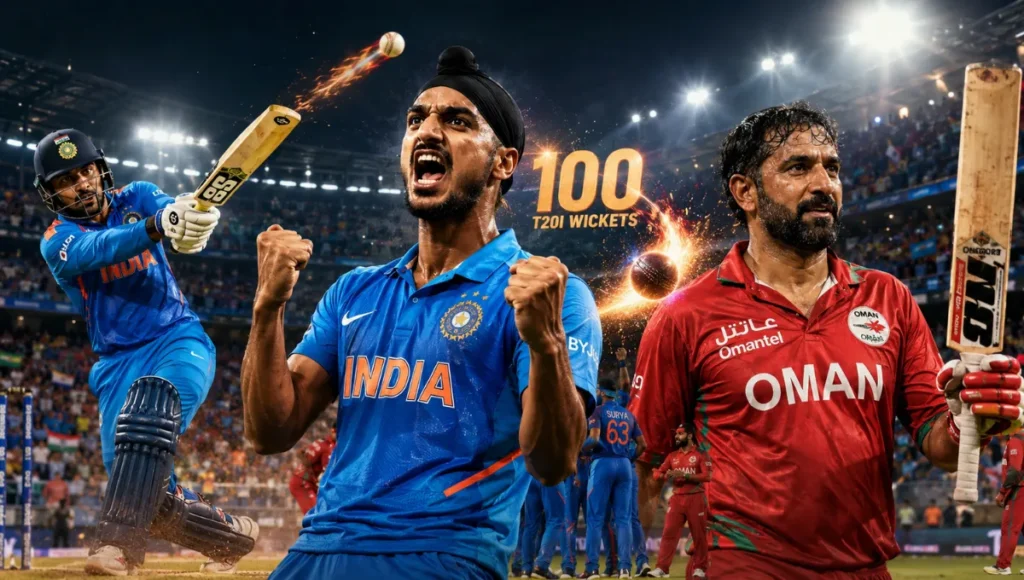
India had already booked their Super 4 spot. Oman had already been knocked out. On paper, this match meant nothing. Then Abhishek Sharma smashed 38 off 15 balls, Aamir Kaleem a 43-year-old who had quietly moved into coaching before this recall walked out and hit 64, and Arshdeep Singh became the first Indian bowler in history to reach 100 T20I wickets. Nothing about this “meaningless” game was actually meaningless.
Which India vs Oman Match Are You Looking For?
There are two different “India vs Oman” scorecards floating around from this period. This one the senior national team fixture from Asia Cup 2025, played on 19 September 2025 at Sheikh Zayed Stadium in Abu Dhabi. And a separate India A vs Oman match from the Asia Cup Rising Stars tournament, involving development squads rather than the full national sides.
If you searched for “India National Cricket Team vs Oman National Cricket Team,” you want this one. The senior team clash is the one with Suryakumar Yadav’s squad, Asia Cup Group A context, and international ranking implications. The A-team fixture is a completely different tournament with different players, different stakes, and a different scoreline. Mixing the two up is an easy mistake, and it’s one worth avoiding if you’re citing stats or milestones from either match.
Match Context: Why This Fixture Existed at All
India and Oman had never met in international cricket before this match, in any format. That alone made it historically notable, regardless of the stakes. India entered as tournament favourites and group leaders, having already beaten UAE and Pakistan in their first two games. Oman had lost both of their opening fixtures and were mathematically out of Super 4 contention before a ball was bowled in this one.
That combination one team with nothing to prove and one team with nothing to lose usually produces either a lopsided rout or a surprisingly free-flowing contest. This match leaned toward the second outcome for large stretches, which is exactly why treating it as a footnote undersells what actually happened on the field.
Match Result and Full Scorecard
Played 19 September 2025, Group A, Asia Cup 2025. India won the toss and elected to bat first. Final result: India won by 21 runs.
India innings: 188/8 (20 overs)
| Batter | Dismissal | Runs | Balls | 4s | 6s | SR |
|---|---|---|---|---|---|---|
| Abhishek Sharma | c V Shukla b J Ramanandi | 38 | 15 | 5 | 2 | 253.33 |
| Shubman Gill | b F Shah | 5 | 8 | 1 | 0 | 62.50 |
| Sanju Samson (wk) | c AR Bisht b F Shah | 56 | 45 | 3 | 3 | 124.44 |
| Hardik Pandya | run out (J Ramanandi) | 1 | 1 | 0 | 0 | 100.00 |
| Axar Patel | c V Shukla b A Kaleem | 26 | 13 | 3 | 1 | 200.00 |
| Shivam Dube | c J Singh b A Kaleem | 5 | 8 | 0 | 0 | 62.50 |
| Tilak Varma | c Z Islam b J Ramanandi | 29 | 18 | 1 | 2 | 161.11 |
| Harshit Rana | not out | 13 | 8 | 0 | 1 | 162.50 |
| Arshdeep Singh | run out (J Ramanandi) | 1 | 1 | 0 | 0 | 100.00 |
| Kuldeep Yadav | not out | 1 | 3 | 0 | 0 | 33.33 |
Extras: 13 (b1, w10, lb2). Fall of wickets: 6-1 (Gill, 1.3 ov), 72-2 (Abhishek, 7.1 ov), 73-3 (Hardik, 7.3 ov), 118-4 (Axar, 11.2 ov), 130-5 (Dube, 13.2 ov), 171-6 (Samson, 17.4 ov), 176-7 (Tilak, 18.3 ov), 179-8 (Arshdeep, 18.6 ov).
Oman bowling: Shakeel Ahmed 3-0-33-0, Shah Faisal 4-1-23-2, Mohammad Nadeem 1-0-19-0, Jiten Ramanandi 4-0-33-2, Samay Shrivastava 2-0-23-0, Zikria Islam 3-0-23-0, Aamir Kaleem 3-0-31-2.
Oman innings: 167/4 (20 overs)
| Batter | Dismissal | Runs | Balls | 4s | 6s | SR |
|---|---|---|---|---|---|---|
| Jatinder Singh (c) | b Kuldeep Yadav | 32 | 33 | 5 | 0 | 96.97 |
| Aamir Kaleem | c Hardik Pandya b Harshit Rana | 64 | 46 | 7 | 2 | 139.13 |
| Hammad Mirza | c sub (Rinku Singh) b Hardik Pandya | 51 | 33 | 5 | 2 | 154.55 |
| Zikria Islam | not out | 0 | 2 | 0 | 0 | 0.00 |
| Vinayak Shukla (wk) | c sub (Rinku Singh) b Arshdeep Singh | 1 | 2 | 0 | 0 | 50.00 |
| Jiten Ramanandi | not out | 12 | 5 | 3 | 0 | 240.00 |
Read Also:- Kolkata Knight Riders Vs Delhi Capitals Match Scorecard
Extras: 7 (b1, w5, nb1). Fall of wickets: 56-1 (Jatinder, 8.3 ov), 149-2 (Kaleem, 17.4 ov), 154-3 (Mirza, 18.5 ov), 155-4 (Shukla, 19.1 ov).
India bowling: Hardik Pandya 4-0-26-1, Arshdeep Singh 4-0-37-1, Harshit Rana 3-0-25-1, Kuldeep Yadav 3-0-23-1, Axar Patel 1-0-4-0, Shivam Dube 3-0-31-0, Tilak Varma 1-0-8-0, Abhishek Sharma 1-0-12-0. Player of the Match: Sanju Samson.
The Turning Point: Abhishek Sharma’s Powerplay Onslaught
Here’s what most recaps get wrong. They say “India posted 188 and won comfortably.” But here’s the real problem for Oman India scored 60 runs in the powerplay alone, and Abhishek Sharma’s 38 came off just 15 balls before the seventh over even started. That single burst effectively decided the eventual margin of victory before Oman had bowled a third of their overs.
What most people miss is that despite that flying start, India actually lost their way in the middle overs. Three wickets fell for just 12 runs between the 11th and 13th over, with Axar Patel and Shivam Dube both dismissed cheaply by Aamir Kaleem’s medium pace. Without Abhishek’s front-loaded burst, India’s total realistically finishes closer to 160, and a chase built around Kaleem and Mirza’s fifties almost certainly gets there.
This is where things go wrong for teams chasing against a side that starts fast and then stalls: they assume the platform is unassailable and relax, when the actual game state has quietly become winnable again. Oman’s bowlers didn’t capitalise fully on that middle-overs squeeze, and that’s the real reason the final margin ended up at 21 runs instead of something tighter.
Player Performance Breakdown
- Sanju Samson (56 off 45, Player of the Match): Promoted to No. 3 after not batting in India’s previous two group games, Samson’s innings was deliberately unhurried. His first fifty runs took 41 balls before he accelerated in the final stretch.
- What people think vs reality: fans expect an aggressive wicketkeeper-batter to strike from ball one; the reality is Samson used this game as a rehearsal for playing time management ahead of the knockout stage, not just power-hitting for its own sake.
- Abhishek Sharma (38 off 15): The most destructive cameo of the match by strike rate. He was actually dropped once by Vinayak Shukla off a delivery later ruled a wide, meaning his final tally could easily have been higher. That’s a reminder that scorecards rarely capture the full story of an innings a near-miss chance early on can swing an entire match’s momentum.
- Aamir Kaleem (64 off 46): The standout human story of the match. At 43 years old, he had stepped back from playing and moved into coaching before this recall to Oman’s squad. His innings, and the ovation that followed from a stadium full of India supporters, mattered more to Oman’s cricket story than the final result did. Practical takeaway for any associate-nation program: veteran experience in a lineup of largely part-time cricketers can still outperform expectations against full-time professionals, given the right conditions and a settled mind.
- Arshdeep Singh (1/37, milestone wicket): His dismissal of Vinayak Shukla made him the first Indian bowler to reach 100 T20I wickets, achieved in just his 64th appearance in the format.
- Practical lesson for any bowler chasing a milestone: he got there with an unremarkable figure line of 1 for 37 proof that career milestones rarely align with a bowler’s statistically best day at the office.
- Hammad Mirza (51 off 33): Combined with Kaleem for a 93-run third-wicket stand that turned a one-sided contest into a genuine scare for India in the final five overs, before India’s death-overs bowling Hardik Pandya and Arshdeep Singh closed the game out with back-to-back tight overs.
- Tilak Varma (29 off 18): Often overlooked in match reports focused on Samson and Abhishek, Varma’s late cameo added crucial runs in the 17th and 18th overs when India needed to push past 170.
- Common mistake commentators make: crediting a big total entirely to the top three, when middle-order finishing runs are often what separates a defendable score from a genuinely competitive one.
- Jatinder Singh (32 off 33, captain): Oman’s captain anchored the chase early, rotating strike and giving his more explosive batters room to accelerate around him. His dismissal to Kuldeep Yadav in the ninth over was the moment India’s spin option finally made an impact after a quiet start to their bowling innings.
Bowling Analysis: Who Actually Won the Game With the Ball
Neither bowling attack had a standout figure line, and that’s worth stating plainly rather than glossing over. India’s best bowling figures were 1-for-23 (Kuldeep Yadav) and 1-for-25 (Harshit Rana) modest numbers for a side that eventually won by 21 runs. Oman’s best were Shah Faisal’s 2-for-23 and Aamir Kaleem’s 2-for-31 with the ball, both of which came in a losing effort.
Bold opinion worth stating clearly: this was a match won by batting depth, not bowling excellence. India’s advantage wasn’t a knockout spell from any single bowler it was that eight different batters contributed runs, compared to Oman’s four. When no bowling unit dominates, the side with more contributors up top usually wins, and that’s exactly the pattern here.
Why a “Dead Rubber” Still Mattered
Calling this match meaningless misses three real storylines that shaped both squads heading into the rest of the tournament and beyond.
| What Looked Meaningless | What It Actually Meant |
|---|---|
| Suryakumar Yadav not batting at all | Let India test its middle order — Samson, Dube, Varma — with real match minutes ahead of the Super 4 stage |
| Jasprit Bumrah and Varun Chakaravarthy rested | Managed workload ahead of a scheduled clash with Pakistan the very next day in the tournament calendar |
| Oman already eliminated | Gave Aamir Kaleem and Hammad Mirza a rare, high-visibility platform against a top-tier opponent in front of a full house |
Read Also:- Punjab Kings Vs Delhi Capitals Match Scorecard
Bold opinion worth stating plainly: treating a group-stage dead rubber as low-value content is exactly the kind of lazy framing that makes most competitor coverage forgettable. This match set the tone for India’s batting order heading into the knockout rounds, and it gave Oman’s cricket program a genuine highlight-reel moment that will likely be shown for years in Oman Cricket’s own promotional material. Context turns a routine scoreline into a story worth reading.
How Net Run Rate Considerations Shaped India’s Approach
Even in a match with no bearing on qualification, net run rate carries weight going into a knockout stage where seeding can determine which side avoids a tougher opponent in the semi-finals. India batting first and posting 188 rather than settling for anything closer to 150 had a secondary benefit beyond simply winning the match it protected a healthy run-rate buffer heading into the Super 4 phase.
Common mistake broadcasters make when covering dead-rubber matches: they frame net run rate as irrelevant once qualification is secured, ignoring that it still affects tournament seeding and tie-breaker scenarios later in the competition.
For Oman, restricting India to under 190 despite conceding at nearly 9.4 runs per over was, in isolation, a defensible bowling performance against a full-strength top-order lineup.
The lesson for associate-nation attacks facing star-studded batting lineups is straightforward: contain the damage in short bursts rather than chasing wickets at any cost, because containing does more for team morale and lets a chase stay alive longer than gambling for early breakthroughs that rarely come.
The Bigger Pictur: What This Match Means for Associate Cricket
Oman’s participation in Asia Cup 2025 wasn’t just about results. It was about visibility. A team ranked far below India in every format got a full match, on a major broadcast platform, against the reigning world number one side. Performances like Kaleem’s 64 and Mirza’s 51 don’t change Oman’s ranking, but they do change perception both for sponsors and for young cricketers back home who now have a specific highlight to point to.
For India, the takeaway runs the other way. A near-full-strength batting lineup was made to work by a team with a fraction of their resources. That’s not a crisis, but it is useful information heading into a Super 4 stage against sides who would punish a similar middle-overs stall far more severely than Oman managed to.
Key Highlights and Records From the Match
- This was the first-ever meeting between India and Oman in international cricket, in any format.
- Arshdeep Singh became the first Indian bowler to reach 100 T20I wickets, doing so in his 64th appearance.
- Sanju Samson’s 56 came in his first innings of the tournament after being unused in India’s first two group games.
- Aamir Kaleem’s 64 came on his and Oman’s first-ever appearance against India, following a period away from playing to focus on coaching.
- India completed their group stage unbeaten in three matches, entering the Super 4 stage with full momentum.
- Oman’s 167/4 was one of the highest totals posted against India by an associate nation in a T20I to that point.
Frequently Asked Questions (FAQs)
Q1. Who won the India vs Oman match in Asia Cup 2025?
Ans. India won by 21 runs, posting 188/8 before restricting Oman to 167/4 at Sheikh Zayed Stadium, Abu Dhabi, on 19 September 2025.
Q2. Who was Player of the Match in India vs Oman?
Ans. Sanju Samson was named Player of the Match for his 56 off 45 balls, batting at No. 3 in his first innings of the tournament.
Q3. What milestone did Arshdeep Singh achieve against Oman?
Ans. Arshdeep Singh became the first Indian bowler in history to reach 100 T20I wickets, getting there in his 64th T20I appearance by dismissing Vinayak Shukla.
Q4. Did Suryakumar Yadav bat in the India vs Oman match?
Ans. No. Suryakumar Yadav did not bat at all despite India losing 8 wickets, since the top and middle order used up all the batting opportunities in a match India had already all but won.
Q5. Is this the same as the India A vs Oman match?
Ans. No. This senior-team Asia Cup 2025 match is different from the separate India A vs Oman fixture played in the Asia Cup Rising Stars tournament, which involved development squads rather than the full national teams.