
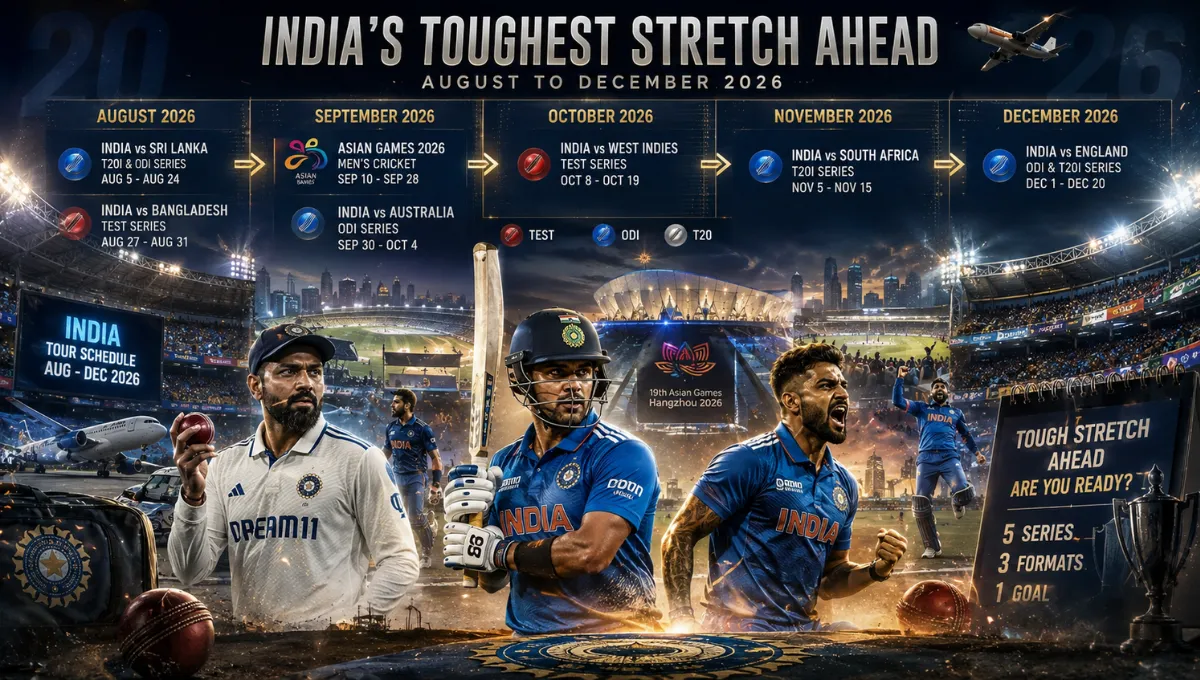
Most fans assume India’s toughest cricketing stretch of 2026 already happened the T20 World Cup, followed immediately by two months of IPL. That assumption is wrong. Look closely at the calendar from August through December, and you’ll find India playing five separate series across three formats, including a genuinely unusual Asian Games commitment squeezed between bilateral tours.
If you’re trying to actually plan around India’s cricket year, the back half deserves far more attention than it’s getting. Here’s the complete breakdown.
2026 Snapshot: A Year Already Defined by One Trophy
India’s 2026 international calendar was always going to be packed, built around hosting the T20 World Cup in February and March. India delivered on that promise, becoming the first team to successfully defend the T20 World Cup title, beating New Zealand by 96 runs in the final at Ahmedabad.
What most people miss when they see a calendar with “T20 World Cup” as the headline event is that the tournament actually represents less than 15% of India’s total match commitments for the year the surrounding bilateral schedule is genuinely relentless.
First Half Recap: January to July Results
India began 2026 with a home series against New Zealand, featuring 3 ODIs and 5 T20Is played across January. This series served as direct preparation for the T20 World Cup, which ran from February 7 to March 8, with India ultimately lifting the trophy.
India’s Completed 2026 Fixtures (January-July)
| Period | Series | Format | Result |
|---|---|---|---|
| January 11-31 | vs New Zealand (Home) | 3 ODIs, 5 T20Is | Completed |
| February 7-March 8 | T20 World Cup (Home) | T20Is | India won the title |
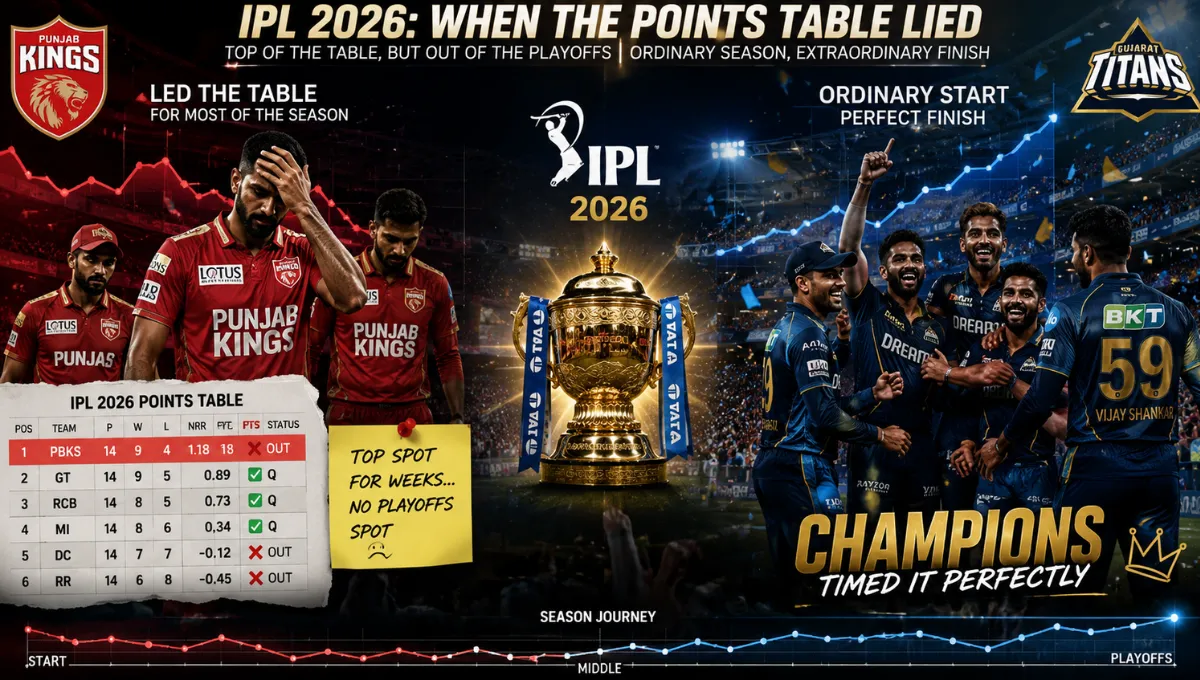
| March-May | IPL 2026 | T20 | RCB won the title |
| June 6-20 | vs Afghanistan (Home) | 1 Test, 3 ODIs | India won 4-0 across formats |
| June 26-28 | vs Ireland (Away) | 2 T20Is | Completed |
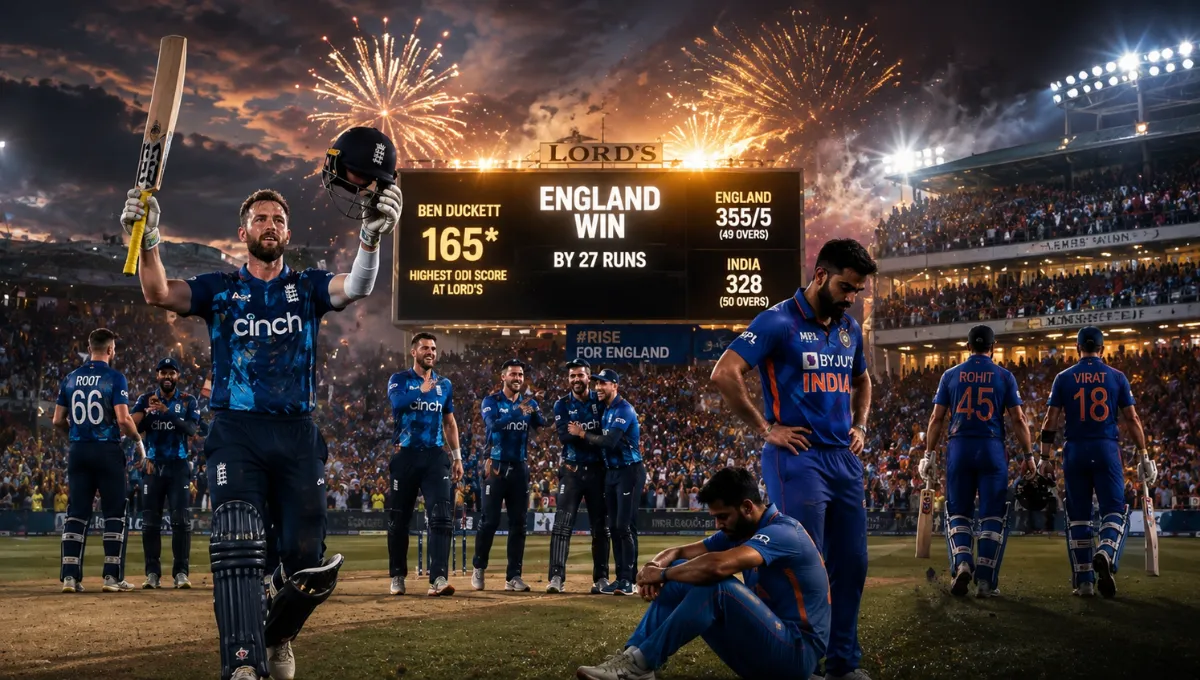
| July 1-19 | vs England (Away) | 5 T20Is, 3 ODIs | England won the ODI series 2-1 |
| July 23-26 | vs Zimbabwe (Away) | 3 T20Is | India won 3-0 |
Read Also:- IPL Points Table 2026: Latest Team Standings & Rankings
Here’s where things go wrong for anyone assuming India’s form has been consistent throughout the year. India won the T20 World Cup and swept Afghanistan across formats, but then lost the ODI series to England 2-1 in July, a result that triggered a genuine team management review.
What people think happened is that a T20 World Cup-winning squad should be dominant across every format and series. The reality is format-specific squad rotation, injuries, and fatigue from an packed calendar can produce genuinely inconsistent results even in the same calendar year as a major title win.
The Second Half: India’s Real Test Begins
India’s most demanding overseas Test assignment of the year begins on August 15, with a two-match Test series in Sri Lanka running through August 27. This is immediately followed by a T20I series against Afghanistan in September, though the venue and exact dates were still to be announced as of the schedule’s publication.
India’s Remaining 2026 Fixtures (August-December)
| Period | Series | Format |
|---|---|---|
| August 15-27 | vs Sri Lanka (Away) | 2 Tests |
| September (TBA) | vs Afghanistan (Away) | 3 T20Is |
| September 19-October 4 | Asian Games (Japan) | T20Is |
| September 27-October 17 | vs West Indies (Home) | 3 ODIs, 5 T20Is |
| October 22-December 1 | vs New Zealand (Away) | 2 Tests, 5 ODIs, 5 T20Is |
| December 13-27 | vs Sri Lanka (Home) | 3 ODIs, 3 T20Is |
A genuinely counterintuitive idea worth stating directly: the Sri Lanka Test series, despite being India’s only away red-ball assignment before New Zealand later in the year, will likely receive less pre-series hype than the white-ball fixtures around it, even though it’s arguably the more selectorially significant series for India’s Test squad depth heading into a busy 2027.
The Workload Crunch: October to December
This is the section every competitor schedule page genuinely underplays. Between September 27 and December 27,
India plays four separate multi-format commitments: the home series against West Indies, the Asian Games in Japan, a full tour of New Zealand spanning three formats, and a home series against Sri Lanka. That’s roughly three months of near-continuous cricket with minimal recovery windows between switching opponents and formats.
Practical Breakdown of the Crunch Period
- India’s home West Indies series (Sept 27-Oct 17) overlaps in preparation timing with the Asian Games squad, meaning selectors must split player availability across two simultaneous commitments.
- The New Zealand tour alone spans 6 weeks and covers all three formats, arguably the single most demanding assignment of India’s entire year.
- Just 12 days separate the end of the New Zealand tour and the start of the home Sri Lanka series in December, leaving almost no recovery buffer.
What people think happened with India’s 2026 calendar is that the toughest stretch was already completed during the T20 World Cup and IPL period. The reality is the October-to-December stretch demands more squad depth management, given the format-switching frequency and near-zero gaps between tours, than any other period in the year.
Turning point: The BCCI’s decision to schedule the Asian Games alongside the West Indies home series will force genuine squad rotation decisions, testing India’s format-specific bench strength in a way the earlier, more spaced-out fixtures in the year did not require.
The India A Pipeline: What It Signals for Selection
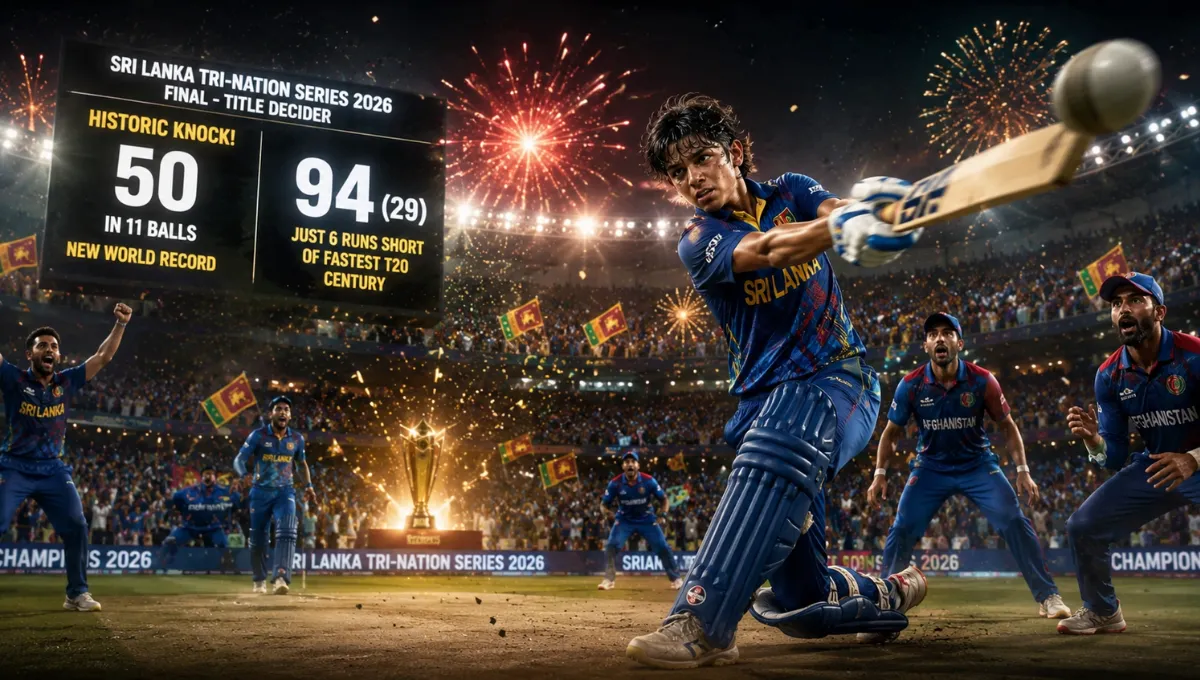
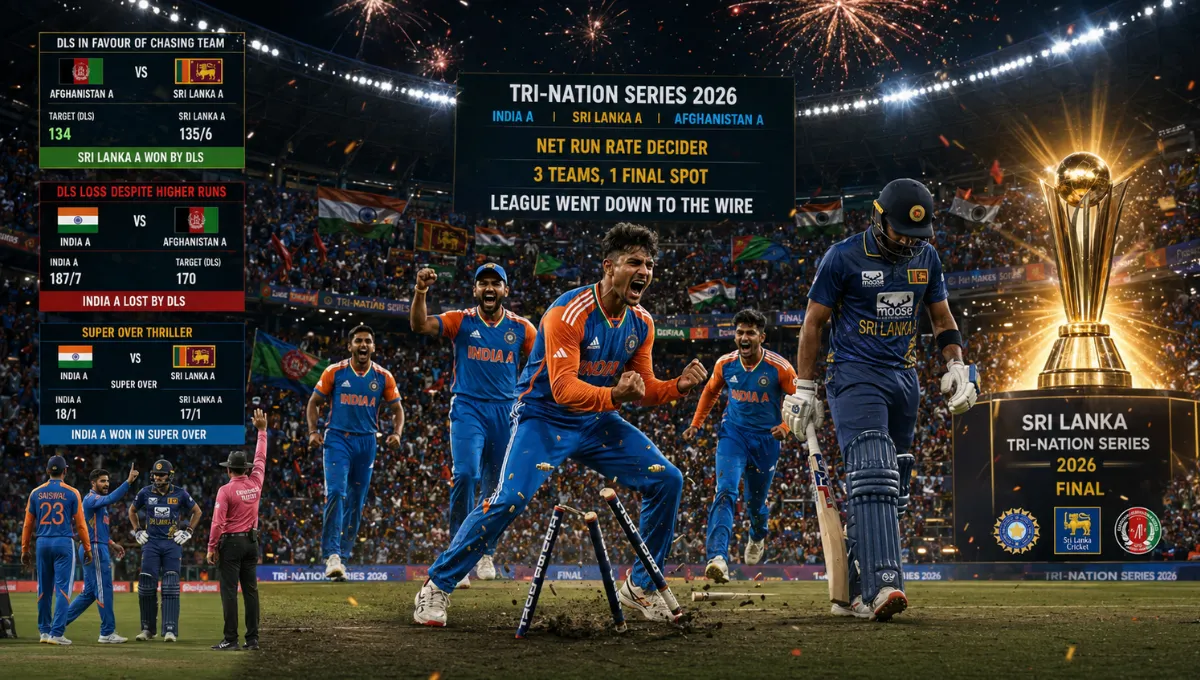
India A’s 2026 schedule, including their Tri-Nation Series campaign in Sri Lanka during June, functions as a direct pipeline for senior team selection decisions during exactly this kind of packed second-half period. Players like Vaibhav Sooryavanshi, who produced a record-breaking innings for India A during the Tri-Nation Series final, become genuine bench options precisely when senior squad rotation becomes unavoidable due to overlapping commitments like the Asian Games and West Indies series.
A common mistake worth correcting directly: fans and analysts often treat India A fixtures as developmental cricket disconnected from senior team planning. The reality is this exact October-to-December workload crunch is precisely when India A performances translate most directly into senior squad opportunities, since selectors have no choice but to rotate personnel across simultaneous commitments.
Player Performance Breakdown
| Period | Standout Performance | Context |
|---|---|---|
| T20 World Cup Final | Sanju Samson’s 89 | Sealed India’s historic title defense |
| Afghanistan Test | Manav Suthar’s 6-wicket debut | Demonstrated genuine squad depth in spin bowling |
| England ODI series | Rohit Sharma’s 138 at Lord’s | Showed veteran class despite the series loss |
| Zimbabwe T20Is | 3-0 clean sweep | Restored momentum after the England series disappointment |
| India A Tri-Nation Series | Vaibhav Sooryavanshi’s record 94 | Strengthened the bench options for the packed second half |
Read Also:- India vs Sri Lanka Tri Series 2026 Match Report and Key Highlights
An original observation worth stating plainly: India’s 2026 calendar structure, with its genuinely brutal October-to-December crunch, deserves recognition as a stronger test of squad management than the T20 World Cup itself. Winning a tournament requires peak performance across a concentrated month; surviving this back-half schedule without significant form or fitness dropoff requires an entirely different kind of organizational discipline from the team management.
What This Schedule Reveals
India’s 2026 calendar shows a deliberate front-loading of white-ball priority around the T20 World Cup, followed by a second half that demands genuine format versatility across Test, ODI, and T20I cricket within compressed timeframes. The overlapping Asian Games and West Indies commitments in September-October specifically will force selectors to trust India A pipeline performers earlier than they might in a less congested year.
Going forward, fans wanting to follow India’s most selectorially significant matches should prioritize watching the New Zealand tour closely, since its three-format, six-week structure will likely determine which fringe players cement permanent squad spots heading into 2027.espn+2
Frequently Asked Questions (FAQs)
Q1. What is India’s next series after the Sri Lanka Test tour in 2026?
Ans. India plays a three-match T20I series against Afghanistan in September, followed immediately by the Asian Games in Japan.
Q2. When does India tour New Zealand in 2026?
Ans. India tours New Zealand from October 22 to December 1, 2026, playing 2 Tests, 5 ODIs, and 5 T20Is across all three formats.
Q3. Did India win the T20 World Cup in 2026?
Ans. Yes, India won the T20 World Cup 2026, beating New Zealand by 96 runs in the final at Ahmedabad, becoming the first team to successfully defend the title.
Q4. How many matches does India play against West Indies in 2026?
Ans. India hosts West Indies for 3 ODIs and 5 T20Is between September 27 and October 17, 2026.
Q5. Why is the October to December period considered India’s toughest scheduling stretch in 2026?
Ans. This period includes four separate multi-format commitments — West Indies at home, the Asian Games, a full New Zealand tour, and Sri Lanka at home — with minimal recovery gaps between them.







Leave a Reply