
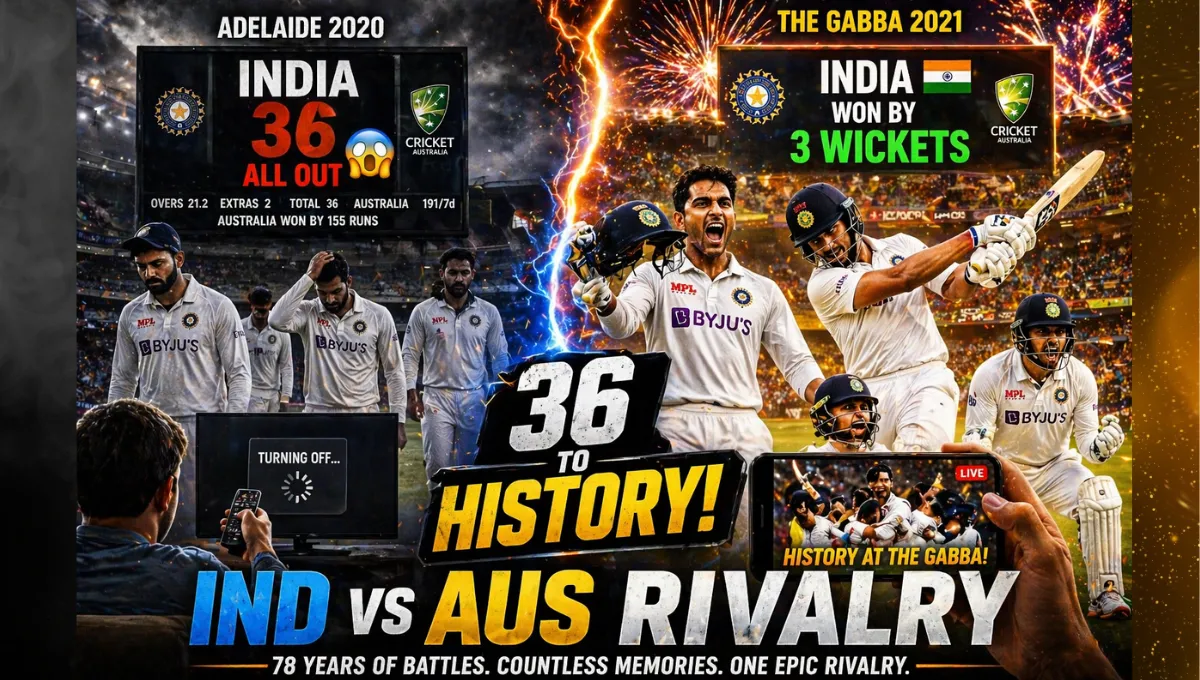
Rohit Sharma played his 500th international match in the first game of this tour. By the time it ended three weeks later, he’d scored his 50th international century, passed his 100th ODI catch, and been named Player of the Series.
That single arc from a milestone appearance to a milestone-laden finish is the clearest thread running through this entire tour.
Which Australia vs India Tour Are You Looking For?
India toured Australia twice in close succession around this period: this white-ball tour (3 ODIs, 5 T20Is) played from 19 October to 8 November 2025, and a separate Border-Gavaskar Trophy Test series played later in the same season. This article covers the white-ball tour specifically the ODI and T20I series, not the Test matches.
| Detail | Information |
|---|---|
| Tour | India tour of Australia, 2025-26 (white-ball) |
| Format | 3 ODIs, 5 T20Is |
| Dates | 19 October – 8 November 2025 |
| India ODI captain | Shubman Gill (first assignment) |
| India T20I captain | Suryakumar Yadav |
| Australia captain (both formats) | Mitchell Marsh |
| ODI series result | Australia won 2-1 |
| T20I series result | India won 2-1 |
Timeline Overview: Both Series at a Glance
| Series | Matches | Result | Player of the Series |
|---|---|---|---|
| ODI series | 3 | Australia won 2-1 | Rohit Sharma (India) |
| T20I series | 5 | India won 2-1 | Abhishek Sharma (India) |
The ODI Series Timeline: Match by Match
| Date | Match | Result | Key Detail |
|---|---|---|---|
| 19 October | 1st ODI | Australia won by 7 wickets | Rain-reduced to 26 overs; Australia’s first-ever ODI win at the venue |
| 23 October | 2nd ODI | Australia won by 2 wickets | Chased 265 in 46.2 overs; Zampa 4/60 |
| 25 October | 3rd ODI | India won by 9 wickets | Rohit Sharma 121* — his 50th international century |
Rain reduced the first ODI to 26 overs per side. India managed only 136/9, and Australia chased down a revised target of 131 in 21.1 overs to win by 7 wickets. This was Australia’s first-ever ODI win at the venue. Mitchell Owen and Matt Renshaw made their ODI debuts for Australia, and Nitish Kumar Reddy debuted for India.
Shubman Gill captained India in ODIs for the first time, and Rohit Sharma played his 500th international match in the same game.
In the second ODI, India posted 264/9, with Rohit Sharma scoring 73. Australia chased it down, reaching 265/8 in 46.2 overs to win by 2 wickets, with Matthew Short’s 74 the key contribution and Adam Zampa taking 4/60.
In the third ODI, Australia were bowled out for 236, with Harshit Rana taking 4/39. India chased it down comfortably, finishing 237/1 in 38.3 overs, sealed by Rohit Sharma’s unbeaten 121 off 125 balls. Australia had already won the series 2-0 at this point, making this a consolation match for India, but the individual milestones packed into it were significant regardless.
Turning Point: Rohit Sharma’s Century That Came Too Late to Matter and Mattered Anyway
Here’s what most recaps get wrong. They frame the third ODI as a meaningless dead rubber since Australia had already won the series.
But here’s the real problem with that framing Rohit Sharma’s century in that exact match was his 50th international century and his 33rd in ODIs, alongside his 100th ODI catch and Virat Kohli surpassing Kumar Sangakkara to become the second-highest run-scorer in ODI history in the same innings.
What most people miss is that a series being decided doesn’t make the remaining match meaningless it just changes what’s actually at stake, from the series result to individual milestones and squad form heading into the next assignment.
Player Performance Breakdown: ODI Series
| Player | Team | Contribution |
|---|---|---|
| Rohit Sharma | India | 202 runs, ODI Player of the Series, 121* in the decider |
| Adam Zampa | Australia | 4 wickets, leading wicket-taker for Australia |
| Harshit Rana | India | 6 wickets, including 4/39 in the 3rd ODI |
| Matthew Short | Australia | 74 in the 2nd ODI, key to the series-clinching win |
Read Also:- Australian Men’s Cricket Team vs South Africa National Cricket Team Timeline
Rohit Sharma’s arc across the series a modest first ODI, a promising 73 in the second, then a match-defining, milestone-stacked 121 not out in the third is a clean example of a senior player building form match by match rather than arriving at peak form immediately.
Bold opinion worth stating plainly: a Player of the Series award from the losing side is a rare and meaningful signal it means the opposition’s own analysts likely rated Rohit’s individual contribution as the single most important factor across all three matches, even in defeat.
Adam Zampa and Harshit Rana both finished as their respective side’s leading wicket-taker, with Rana’s 4/39 in the third ODI standing out as the most substantial individual bowling performance of the series. Mitchell Marsh and Matthew Short’s contributions across the first two matches gave Australia the platform to close out the series 2-1 before India’s consolation win in the third.
Common mistake in reading a dead-rubber match: assuming nothing meaningful can happen once a series is decided.
Practical lesson for teams managing a squad through a long tour: using a decided series finale to test individual form and build confidence for the next assignment is a genuinely useful strategic choice, not a wasted fixture.
The T20I Series Timeline: Match by Match
| Date | Match | Result | Key Detail |
|---|---|---|---|
| 29 October | 1st T20I | No result | Rain; India 97/1 (9.4 ov), Suryakumar Yadav 39* |
| 31 October | 2nd T20I | Australia won by 4 wickets | Abhishek Sharma 68; Hazlewood 3/13 |
| 2 November | 3rd T20I | India won by 5 wickets | Washington Sundar 49* sealed the chase |
| 6 November | 4th T20I | India won by 48 runs | Sundar 3/3 in 1.2 overs bowled Australia out for 119 |
| 8 November | 5th T20I | No result | Rain; India 52/0 (4.5 ov) |
Rain ended the first T20I early with India on 97/1 after 9.4 overs, Suryakumar Yadav unbeaten on 39. No result.
In the second T20I, India were bowled out for 125, with Abhishek Sharma’s 68 the standout contribution and Josh Hazlewood taking 3/13. Australia chased it down in 13.2 overs, winning by 4 wickets.
In the third T20I, Australia posted 186/6, with Tim David scoring 74. India chased it down, finishing 188/5 in 18.3 overs to win by 5 wickets, Washington Sundar’s unbeaten 49 sealing the win.
In the fourth T20I, India posted 167/8, with Shubman Gill scoring 46. Australia were bowled out for just 119, with Washington Sundar taking 3/3 in 1.2 overs, giving India a 48-run win and levelling then sealing the series 2-1 in their favour.
In the fifth and final T20I, rain ended the match early with India on 52/0 after 4.5 overs. No result, but with the series already secured, this had no bearing on the outcome.
Turning Point: Washington Sundar’s Twin Bowling Impacts
Here’s what most people miss about this T20I series. They credit Abhishek Sharma’s batting alone for India’s series win, but Washington Sundar’s bowling was just as decisive across two separate matches his unbeaten 49 sealed the third T20I chase, and his 3/3 in just 1.2 overs in the fourth T20I dismantled Australia’s chase before it had any chance to build momentum.
Counterintuitive idea worth stating plainly: a genuine all-rounder contributing decisively with both bat and ball across two different matches in the same short series is a more valuable and harder-to-replicate skill set than any single standout batting or bowling performance in isolation.
Player Performance Breakdown: T20I Series
| Player | Team | Contribution |
|---|---|---|
| Abhishek Sharma | India | 163 runs, T20I Player of the Series, 68 in the 2nd T20I |
| Washington Sundar | India | 50th T20I wicket reached on tour; 49* and 3/3 in two decisive matches |
| Nathan Ellis | Australia | 9 wickets, highest tally of the series despite Australia losing |
| Varun Chakravarthy | India | 5 wickets across the T20I leg |
Abhishek Sharma’s 68 in the second T20I, delivered in a losing effort, still set the tone for his tournament proof that individual excellence and team results don’t always move together, and that selectors and award panels increasingly recognise this distinction rather than only rewarding players from winning sides.
Washington Sundar reached his 50th T20I wicket during the tour, while also contributing crucial runs in the series-deciding matches a genuinely complete all-round contribution across the back half of the series. Varun Chakravarthy and Nathan Ellis both finished as leading wicket-takers for their sides, with Ellis’s tally the highest of any bowler across the entire T20I series despite Australia losing it.
Why the Two Series Went in Opposite Directions
| Factor | ODI Series (Australia won 2-1) | T20I Series (India won 2-1) |
|---|---|---|
| Weather impact | None of the three matches were abandoned, though the 1st was rain-shortened | Two of five matches (1st and 5th) were washed out entirely with no result |
| Key difference-maker | Australia’s depth across two matches before India’s consolation win | Washington Sundar’s twin match-winning contributions in the 3rd and 4th T20Is |
| Standout individual, winning side | Adam Zampa and Matthew Short (Australia) | Abhishek Sharma and Washington Sundar (India) |
| Standout individual, losing side | Rohit Sharma (India), Player of the Series regardless | Nathan Ellis (Australia), leading wicket-taker regardless |
Read Also:- England Cricket Team vs Australian Men’s Cricket Team Timeline
Bold opinion worth stating plainly: the fact that both series produced a losing-side Player of the Series contender Rohit Sharma’s award and Nathan Ellis’s wicket tally suggests this entire tour was closer in overall quality between the two sides than either 2-1 scoreline alone reflects. Individual brilliance was distributed across both teams almost evenly.
what actually separated the results was which side’s role players stepped up in the specific matches that decided each series.
Weather’s Real Impact on the Final Numbers
Weather played a genuinely uneven role across the two series. None of the three ODIs were abandoned outright, though the first was rain-shortened. In the T20I series, two of five matches the first and the fifth were washed out entirely with no result.
Practical takeaway for anyone assessing this tour’s records: the T20I series result should be read as a genuine 2-1 outcome decided across only three completed matches, not five, since the two washed-out games contributed no data toward the final result at all.
What This Tour Revealed About Squad Depth
This tour also offers a useful case study in squad depth. Australia handed ODI debuts to both Mitchell Owen and Matt Renshaw in the very first match, while India introduced Nitish Kumar Reddy in the same game.
Common mistake in assessing a bilateral tour’s long-term impact: focusing only on the series scorelines while ignoring the squad depth signals buried inside individual matches. Both sides used this white-ball tour to test fringe players in real match conditions, a decision that matters more for each team’s medium-term planning than the immediate series results do.
Why the Rain-Reduced Opener Skews Comparisons
Venue and conditions also shaped this tour more than a simple scoreline suggests. The first ODI’s rain reduction to 26 overs fundamentally changed both sides’ approach, favouring aggressive batting over the accumulation that a full 50-over innings rewards.
Practical observation worth noting: any time a match is reduced by rain, comparing individual performances in that game directly against performances in unaffected matches from the same series risks misleading conclusions, since the format itself has effectively changed for that specific fixture.
The Bigger Picture: A Genuinely Balanced Tour
Looking at the tour as a whole, the two series results tell a genuinely balanced story rather than a lopsided one. Australia’s ODI depth, shown through contributions from Marsh, Short, and Zampa across the first two matches, proved just enough to secure that series before India’s spirited consolation win. India’s T20I depth, anchored by Abhishek Sharma’s batting and Washington Sundar’s all-round excellence, proved slightly stronger across the format’s shorter matches.
Bold opinion worth stating plainly: this tour is a strong argument that neither side currently holds a clear across-format white-ball advantage over the other, and future meetings between these two teams in white-ball cricket are likely to remain this close.
For India, the tour offers a clear practical decision heading into future assignments: Washington Sundar’s genuine all-round value in T20Is deserves a more permanent, higher-order role rather than treatment as a bowling specialist who occasionally contributes runs.
For Australia, the ODI series win, achieved despite Rohit Sharma’s individually superior form, confirms that a well-distributed batting effort across multiple players can still overcome one opponent’s standout individual performer a genuinely useful lesson for squad balance heading into future series against India.
Key Highlights and Records Along the Timeline
| Highlight | Detail |
|---|---|
| ODI series result | Australia won 2-1, with Rohit Sharma named Player of the Series despite India losing |
| Rohit Sharma’s century | 121* in the 3rd ODI — his 50th international century and 33rd in ODIs |
| Kohli’s record | Passed Kumar Sangakkara as the 2nd-highest run-scorer in ODI history, in the same match as Rohit’s century |
| T20I series result | India won 2-1, with two matches (1st and 5th) washed out entirely |
| T20I Player of the Series | Abhishek Sharma, 163 runs |
| All-round contribution | Washington Sundar — 50th T20I wicket, plus match-winning bat and ball in the 3rd and 4th T20Is |
Frequently Asked Questions (FAQs)
Q1. Who won the Australia vs India ODI series in 2025-26?
Ans. Australia won the three-match series 2-1. India won the third and final match, but Australia had already secured the series after winning the first two.
Q2. Who won the Australia vs India T20I series in 2025-26?
Ans. India won the five-match series 2-1. Two matches, the 1st and 5th, were washed out by rain with no result.
Q3. What milestone did Rohit Sharma achieve during this tour?
Ans. Rohit Sharma scored his 50th international century and 33rd ODI century with an unbeaten 121 in the 3rd ODI, also taking his 100th ODI catch in the same match. He was named ODI Player of the Series despite India losing it.
Q4. Who was Player of the Series in the T20I series?
Ans. Abhishek Sharma was named T20I Player of the Series after scoring 163 runs across the five matches, including a 68 in a losing effort in the 2nd T20I.
Q5. Is this the same tour as the Border-Gavaskar Trophy Test series?
Ans. No. This white-ball tour (3 ODIs, 5 T20Is) was played from 19 October to 8 November 2025. The Border-Gavaskar Trophy Test series was a separate assignment played later in the same Australian season.







Leave a Reply